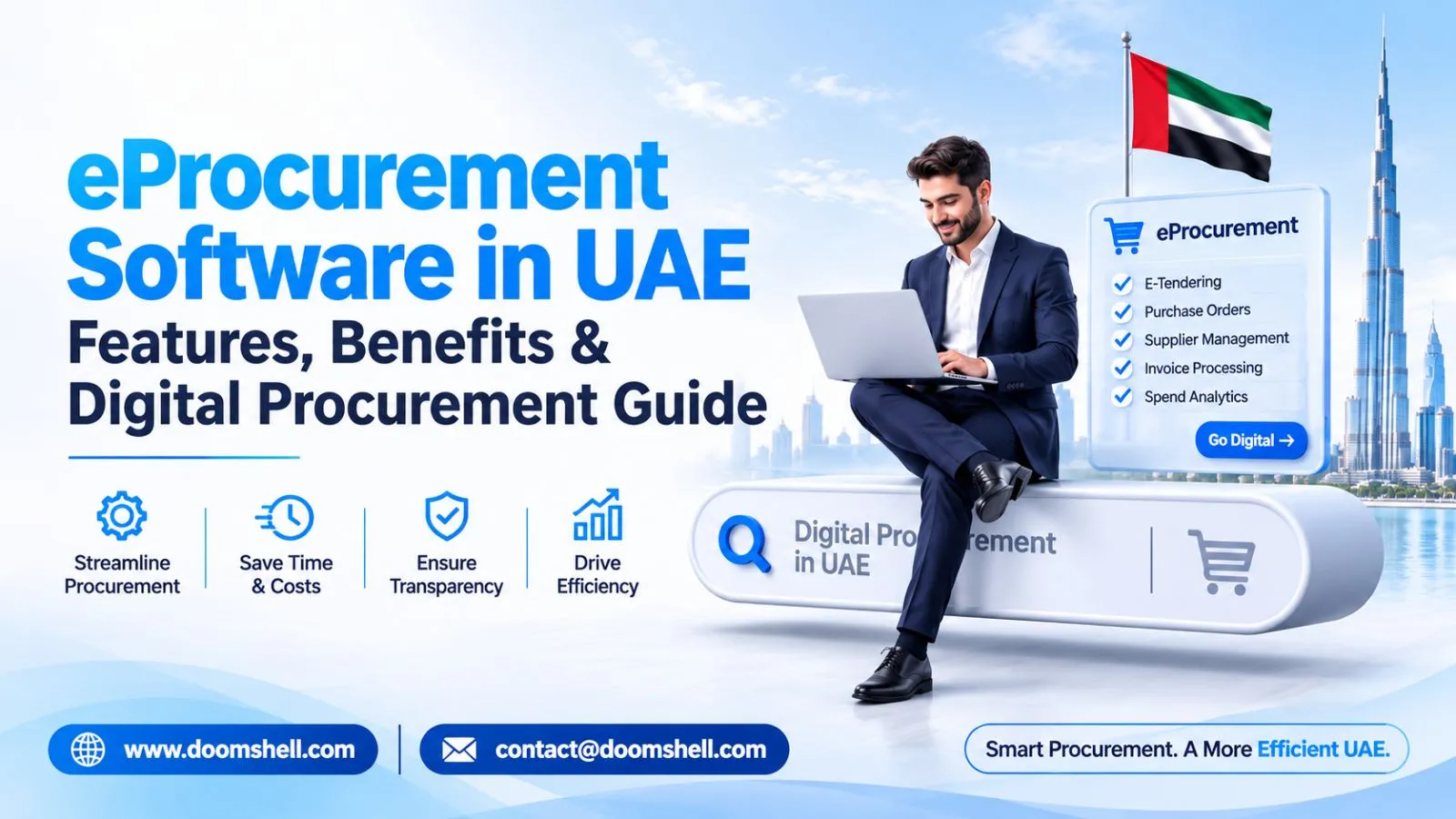
eProcurement Software in UAE helps organisations manage purchasing activities through a structured digital platform instead of relying on disconnected emails, spreadsheets and paper-based approvals. It brings purchase requests, supplier information, purchase orders, approvals and procurement records into a coordinated workflow. For businesses managing multiple departments, locations or vendors, this creates a clearer process from identifying a requirement to completing a purchase.
Digital procurement is also becoming increasingly important across the UAE. The federal government’s Digital Procurement Platform supports electronic tendering, supplier participation, purchase orders, invoices and contract processes. This reflects a wider shift towards transparent, trackable and efficient purchasing operations.
What Is eProcurement?
eProcurement, or electronic procurement, is the process of purchasing goods and services through digital systems. An eProcurement platform allows employees to raise purchase requests, procurement teams to manage suppliers and quotations, and authorised managers to review and approve transactions. The system records each stage, helping organisations maintain consistent procedures and accessible purchasing information.
Unlike a basic online ordering tool, a complete procurement solution can support several activities across the purchasing lifecycle. Depending on the platform, these may include supplier registration, requests for quotations (RFQs), tender management, bid evaluation, purchase orders, contract records and spend reporting. Businesses can choose the modules that match their procurement requirements.
eProcurement vs Traditional Procurement
Traditional procurement often involves paper forms, email conversations, spreadsheets and manual follow-ups. These methods may work for a small organisation with limited purchasing needs. However, as the number of suppliers, employees and transactions increases, it becomes harder to track requests and maintain consistent records.
A digital system centralises these activities. Employees can submit requests online, managers can approve them through defined workflows, and procurement teams can access supplier and purchasing information in one place.
Key differences include:
-
Request handling: Traditional processes rely on paper or email, while digital systems capture requests in standardised forms.
-
Approvals: Manual follow-ups are replaced with configured approval routes and notifications.
-
Supplier information: Vendor details and documents are stored centrally rather than across separate files.
-
Tracking: Users can check request and order status without searching through email threads.
-
Reporting: Procurement data can be organised into reports for spending and supplier analysis.
How an eProcurement System Works
An eProcurement workflow usually starts when an employee identifies a business requirement. The employee submits a purchase requisition containing details such as the item, quantity, estimated cost, department and required date. The system then routes the request to the relevant approver based on organisational rules.
After approval, the procurement team can identify suitable suppliers, request quotations or initiate a tender. Offers are reviewed against price, specifications, delivery timelines and other evaluation criteria. Once a supplier is selected, an authorised user creates a purchase order.
The system records the transaction and allows relevant users to monitor its progress. Depending on the organisation’s setup, the workflow may continue through delivery confirmation, invoice processing, payment coordination and contract tracking. This creates a traceable purchasing record from request to completion.
Types of eProcurement Software
Different organisations need different levels of procurement functionality. Common types include:
-
Purchase management systems: Manage requisitions, approvals, purchase orders and routine buying activities.
-
Supplier management systems: Maintain vendor profiles, documents, qualification details and performance records.
-
eTendering platforms: Publish tenders, collect bids and support structured technical and commercial evaluations.
-
Source-to-Pay platforms: Connect sourcing, supplier selection, purchasing, invoicing and related activities.
-
Specialised procurement solutions: Support particular requirements such as reverse auctions, contract management or multi-department purchasing.
Some businesses need only purchase request and order management. Others require a broader platform that includes competitive bidding, supplier prequalification and contract governance.
When UAE Businesses Should Adopt eProcurement
A business should consider digital procurement when purchasing becomes difficult to coordinate or control. Warning signs include delayed approvals, repeated data entry, limited supplier visibility, duplicate purchases and difficulty preparing spending reports.
The need may be especially clear when an organisation operates across multiple departments or Emirates, works with a large supplier base, or manages formal quotation and tender processes. Businesses supplying government entities should also understand the relevant registration and procurement procedures for the specific authority or platform. Federal procurement processes and individual emirate-level systems may have different requirements.
Core Features of an eProcurement System
A useful procurement platform should do more than store purchase records. It should guide users through each stage, apply the organisation’s purchasing rules and make information available to authorised stakeholders. The following features form the foundation of an effective procurement management system.
Purchase Requisition Management
Purchase requisition management gives employees a standard way to request goods or services. Instead of sending informal messages to the procurement team, users complete a digital request with the information needed for review.
Typical fields include:
-
Product or service description
-
Quantity and estimated cost
-
Department or cost centre
-
Business purpose and supporting documents
-
Required delivery date
-
Suggested supplier, where applicable
A structured request reduces incomplete submissions and helps procurement teams understand demand before placing an order. It can also support budget checks and approval routing, depending on system configuration.
Supplier and Vendor Management
Supplier management provides a central record of vendors and their relevant information. Procurement teams can maintain contact details, product categories, licences, certifications, commercial documents and qualification status.
A well-organised supplier database makes it easier to identify suitable vendors for different purchasing requirements. It also helps teams review supplier information before requesting quotations or inviting vendors to participate in a tender.
For UAE organisations working with local and international suppliers, the system should support relevant document requirements and multiple currencies where needed. Supplier onboarding should also include clear review and renewal procedures so that records remain accurate.
Purchase Order Management
A purchase order (PO) is an official document that confirms the details of an intended purchase. Purchase order management allows procurement teams to create, review, issue and track orders through a consistent process.
A system can generate purchase orders using approved requisition details, reducing repeated data entry. It can record supplier information, item descriptions, quantities, prices, delivery terms and other conditions.
Users should be able to monitor whether an order is pending, issued, partially fulfilled or completed. When connected with finance or inventory systems, purchase order data can also support invoice matching and stock planning.
Approval Workflows and Procurement Controls
Approval workflows define who can review and authorise a purchase. Rules may depend on the transaction value, department, category, budget or type of purchase. For example, a routine office supply request may require one approval, while a high-value equipment purchase may need several levels of review.
Role-based permissions help ensure that users can perform only the actions assigned to them. The system can also maintain an activity history showing when a request was submitted, reviewed, approved or returned.
These controls support accountability and reduce the risk of unauthorised purchasing. Organisations should configure approval limits and exceptions according to their internal policies rather than relying on a generic workflow.
How eProcurement Improves Business Operations
A well-configured procurement platform improves coordination between employees, procurement teams, finance departments, managers and suppliers. Its value comes not only from replacing paper forms but also from making purchasing information easier to manage and review.
Automating Procurement Processes
Manual procurement involves repeated tasks such as checking request details, forwarding forms, sending reminders and preparing purchase orders. Automation can reduce this administrative work through predefined workflows.
For example, when an employee submits a requisition, the system can send it to the appropriate manager. After approval, it can notify the procurement team and make the request available for supplier sourcing. Users can receive alerts when action is required or when an order changes status.
Automation does not remove the need for human decisions. Instead, it helps ensure that routine steps happen consistently, while employees focus on supplier selection, negotiations and business priorities.
Improving Spend Visibility
Spend visibility means understanding where an organisation’s purchasing budget is being used. When transactions are recorded in separate spreadsheets or email threads, managers may struggle to build a complete picture of expenditure.
A digital procurement platform can organise spending by department, supplier, category, project or time period. Reports can help identify frequently purchased items, recurring vendors, unusual spending patterns and opportunities to consolidate orders.
These insights support better planning and supplier negotiations. However, reporting quality depends on accurate data, consistent categories and appropriate integration with finance systems.
Reducing Procurement Errors
Manual data entry can lead to incorrect quantities, outdated supplier details, duplicate requests and mismatched purchase orders. Standardised forms and central records help reduce these issues.
An eProcurement system can require essential fields, use approved supplier records and carry information from a requisition into the purchase order. Approval rules can also flag transactions that need additional review.
Digital records make it easier to identify where an error occurred and who handled the transaction. They do not eliminate every mistake, so organisations should combine system controls with staff training and regular data checks.
Creating a Centralized Procurement Workflow
A centralised workflow connects purchasing activities that might otherwise be spread across departments and tools. Employees submit requests through a common process, procurement teams coordinate sourcing, and managers review transactions using defined permissions.
This structure is valuable for organisations with multiple branches or business units. It can provide a consistent view of requests, suppliers and order status while allowing different departments to follow their assigned approval routes.
Modern procurement platforms may also connect tendering, supplier prequalification, bid evaluation and contract records. The UAE Ministry of Finance’s platform demonstrates how digital procurement can connect tender announcements, bids, purchase orders, invoices and supplier interactions in a government environment.
Choosing eProcurement Software for UAE Businesses
Selecting a procurement platform requires more than comparing feature lists. Businesses should understand their current purchasing process, identify operational gaps and decide which activities the software must support. The right solution should fit existing policies while remaining flexible enough to support future growth.
Business and Procurement Requirements
Start by mapping the organisation’s purchasing lifecycle. Identify who raises requests, who approves them, how suppliers are selected and how orders are tracked. Note the problems that cause delays, duplicated work or limited visibility.
Then define the required capabilities. A small business may prioritise requisitions, supplier records and purchase orders. A larger organisation may need tender publishing, supplier prequalification, multi-stage bid evaluation, reverse auctions and contract management.
It is also important to consider procurement frequency. A business conducting occasional tenders may prefer a flexible pay-per-tender option, while an organisation with frequent purchasing activity may benefit from a broader subscription platform.
Integration With Finance and ERP Systems
Procurement does not operate independently of other business functions. Purchase orders, supplier records, budgets, invoices and payments are closely connected with finance and enterprise resource planning (ERP) processes.
Before choosing software, check whether it can integrate with the organisation’s accounting or ERP system. Confirm how information will move between platforms, which system will be the primary source for each record and how duplicate data entry will be avoided.
Useful integration capabilities may include supplier synchronisation, purchase order transfer, budget checks, invoice references and reporting data. API support can help connect the procurement platform with existing business applications, but the integration should be tested against real workflows.
User Roles and Approval Requirements
The platform should reflect the organisation’s structure. Common user groups include employees who raise requests, procurement officers, department managers, finance reviewers, evaluation committee members and system administrators.
Each role should have appropriate access. Employees may need to view their own requests, while procurement teams manage suppliers and sourcing activities. Approvers should see the transactions assigned to them, and administrators should manage configuration and permissions.
For tendering, additional controls may be necessary for confidential bids, committee evaluations and approval records. UAE organisations should assess the security and governance requirements relevant to their sector and procurement activities. Federal procurement law, for example, addresses privacy, confidentiality, security, transparency and system integrity in government procurement.
Reporting, Security and Scalability
Reporting tools should provide useful information without requiring teams to combine multiple spreadsheets. Look for dashboards and exportable reports covering purchasing activity, supplier performance, category spend, approval timelines and tender outcomes.
Security should be assessed carefully. Review authentication, role-based access, encryption, audit logs, backup practices and the provider’s approach to data protection. If the platform handles sensitive commercial bids, ask how bid confidentiality and access restrictions are maintained.
Scalability matters as transaction volumes and user numbers increase. A cloud-based system may offer flexible access and reduce the need to maintain local infrastructure, but businesses should still evaluate availability, support, data hosting arrangements and service commitments. The best choice is a platform that meets current requirements without making future process improvements difficult.
Conclusion
Digital procurement helps UAE organisations bring purchasing requests, suppliers, approvals and orders into a more organised process. By improving workflow visibility and reducing repetitive administration, it can support stronger purchasing controls and more informed decisions. Businesses should assess their procurement needs, integration requirements, security expectations and future growth before selecting a solution.
Doomshell develops digital business solutions, including eTendering and eProcurement software designed to support supplier management, RFQs, tender workflows, bid evaluations, reverse auctions and procurement reporting. Its platform provides web-based procurement capabilities for organisations looking to coordinate sourcing and purchasing activities through a connected workflow. As an IT company, Doomshell also offers software development and business technology services that can help organisations plan and implement digital solutions aligned with their operational requirements.