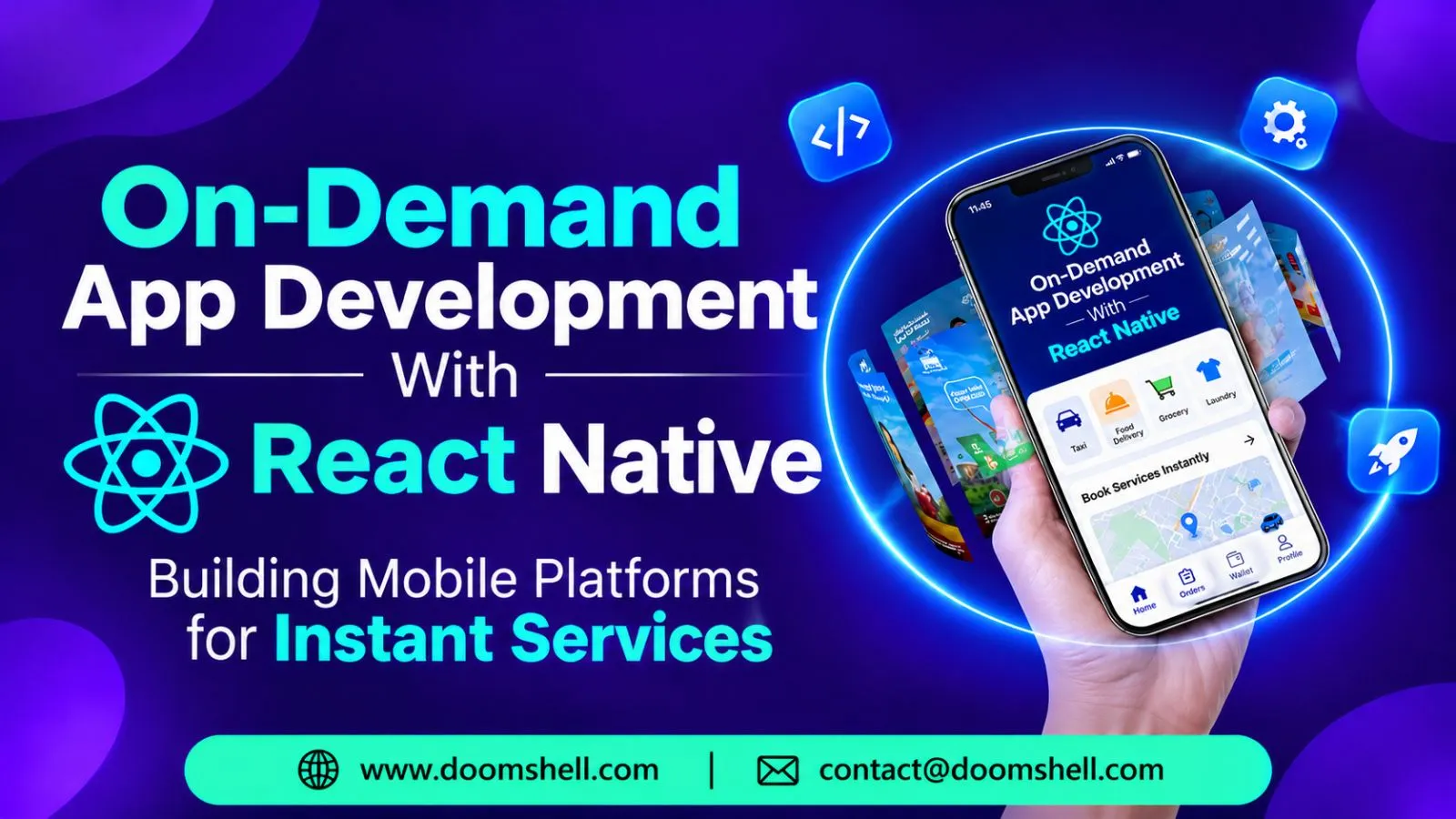
On-demand services have changed how customers access everyday solutions, from home cleaning and beauty appointments to food delivery, transportation, and professional assistance. On-Demand App Development With React Native helps businesses create mobile platforms where customers can discover services, book instantly, communicate with providers, and track requests. A successful platform must also support service partners, manage bookings, process payments, and keep information synchronized. For businesses planning to launch in India, choosing a reliable React Native app development company in Jaipur can help turn a service idea into a practical mobile product for Android and iOS users.
React Native is useful for cross-platform development because teams can share much of the application code while delivering platform-specific mobile experiences. However, the framework alone does not make a service platform successful. Businesses also need a well-designed backend, reliable APIs, real-time communication, location features, and secure transaction workflows. These elements work together to create a smooth experience for customers and service providers.
Creating Customer-Facing Service Apps
The customer application is the main entry point to an on-demand platform. It should make service discovery simple, explain pricing clearly, and reduce the steps required to complete a booking. A confusing interface can lead customers to abandon a request before confirming it. Therefore, the app should prioritize clear navigation, relevant information, and fast interactions.
Building Service Discovery With React Native
Service discovery allows customers to find the right service without searching through unnecessary categories. A home services app, for example, might organize offerings into plumbing, electrical repairs, cleaning, and appliance maintenance. A beauty platform may display salons, individual professionals, available treatments, and service packages.
React Native interfaces can present these categories through searchable lists, filters, cards, and location-based results. Customers should be able to narrow their choices by service type, price, rating, availability, and distance. Clear provider profiles can also display descriptions, experience, photographs, reviews, and estimated service costs.
Search should account for common spelling variations and relevant keywords. The platform can use customer preferences and previous activity to make discovery more relevant. However, recommendations should remain transparent and should not hide suitable alternatives.
Creating Instant Booking Interfaces With React Native
Once customers select a service, the booking process should be straightforward. A useful interface allows them to choose a service, select a date or time slot, enter the required details, review the estimated price, and confirm the request.
React Native can support interactive booking screens, form validation, calendar views, and clear booking summaries. The app should display important conditions before confirmation, including service charges, cancellation rules, travel fees, and expected arrival windows.
Booking availability must come from the backend rather than from information stored only on the device. This helps prevent two customers from reserving the same provider or time slot. After confirmation, the application should display a booking reference and the next steps.
Developing Personalized Customer Dashboards With React Native
A customer dashboard brings important service information into one place. It can display upcoming bookings, completed requests, saved addresses, payment methods, support conversations, and account preferences.
Personalization can make the dashboard more useful. For example, a customer who frequently books cleaning services may see relevant packages or convenient repeat-booking options. The application can also show reminders based on upcoming appointments and previous service activity.
Developers should keep the dashboard organized and avoid displaying too much information at once. React Native components can be reused across different screens, helping maintain consistent design and simplifying future updates. The result is a customer experience that feels familiar, useful, and easy to navigate.
Building Provider and Partner Applications
An on-demand platform needs more than a customer app. Service providers require their own application or dedicated interface to receive work, manage schedules, communicate with customers, and track earnings. The provider experience directly affects service availability and operational efficiency.
Creating Service Provider Apps With React Native
A service provider app gives partners access to the tools they need to manage daily work. After signing in, providers may view their profile, service categories, working hours, service locations, and account verification status.
The application can allow providers to update availability, accept service requests, manage customer details, and review completed jobs. For example, a technician may mark themselves available in the morning, accept a repair request, and update the job status after reaching the customer's location.
Different provider categories may require different workflows. A delivery partner, beauty professional, and home repair technician do not necessarily need identical screens. React Native supports reusable components while allowing interfaces to adapt to each role.
Building Job Assignment Interfaces With React Native
Job assignment connects customer requests with suitable service providers. The system may consider provider availability, service category, distance, workload, ratings, and service-area coverage before recommending an assignment.
A provider interface should present the important details of each request, such as service type, approximate location, scheduled time, estimated payment, and customer instructions. Providers can then accept or reject requests based on platform rules.
The backend should control assignment decisions and maintain a clear record of every status change. If a provider rejects or misses a request, the platform may offer it to another eligible partner. This process helps reduce manual coordination and keeps booking information consistent.
Developing Provider Earnings and Performance Dashboards
Providers need visibility into their work and payments. An earnings dashboard can show completed jobs, pending payments, commissions, incentives, refunds, and payout history. Clear transaction details help partners understand how their earnings are calculated.
Performance dashboards can display accepted requests, completed bookings, cancellations, customer ratings, and response times. These indicators help providers identify areas where they can improve service quality.
Businesses should present performance data fairly and explain how each metric is calculated. Access should also be role-based so providers can view their own information without accessing another partner's private records. A well-planned dashboard builds trust and supports stronger partner engagement.
Supporting Real-Time Service Experiences
Real-time functionality is central to many on-demand platforms. Customers expect timely booking updates, accurate arrival information, and notifications when a provider accepts or completes a request. Providers also need current job details to coordinate their work. These features depend on reliable communication between mobile apps and backend services.
Building Live Order and Booking Tracking With React Native
Live tracking helps customers understand what is happening after a booking is confirmed. Depending on the service, the application may display provider assignment, travel progress, arrival estimates, and job completion status.
React Native can integrate map and location services to show relevant information on a mobile screen. The backend should receive and process location updates, while the application displays the latest authorized information. For example, a customer waiting for a home repair professional may see when the provider is on the way.
Tracking frequency should match the service requirement. Frequent location updates can increase battery and data usage, so developers should balance accuracy with device efficiency. The platform should also explain when tracking begins and ends and obtain appropriate user permissions.
Implementing Real-Time Notifications With React Native
Notifications keep customers and providers informed without requiring them to constantly open the app. Customers may receive alerts when a booking is confirmed, a provider is assigned, an appointment changes, or a payment is completed.
Providers can receive new job requests, schedule reminders, cancellation alerts, and important customer updates. Push notifications are useful for time-sensitive events, while in-app messages can provide additional context.
The backend should trigger notifications based on verified booking events. It should also prevent duplicate or outdated alerts. Users should be able to manage notification preferences, and sensitive information should not appear unnecessarily on a locked screen.
Using Location Services for On-Demand Applications
Location services help platforms identify nearby providers, estimate travel times, calculate service coverage, and support navigation. They are especially valuable for transportation, delivery, home maintenance, and mobile professional services.
A location-based mobile application can request permission when a feature genuinely needs access. Customers may enter an address manually if they prefer not to share their current location. Providers may need location access while completing an active assignment, depending on the platform's operating model.
Location data should be collected only for defined purposes and protected through suitable access controls. Businesses should also plan for weak GPS signals, denied permissions, poor network coverage, and users moving between locations. These conditions require practical fallback options rather than assuming location updates will always be available.
Developing Secure and Scalable React Native Platforms
A reliable on-demand platform needs a strong technical foundation behind its mobile interfaces. As bookings increase, the system must handle more users, transactions, notifications, and provider updates without becoming slow or unreliable. Security, API design, and backend scalability should therefore be considered from the beginning.
Integrating React Native Apps With REST APIs
REST APIs connect the mobile application with backend services. They allow the customer app and provider app to access information such as user profiles, service listings, booking records, payments, and job statuses.
A well-designed API structure separates responsibilities into clear modules. For example, authentication, service discovery, booking management, provider operations, and payment processing can use defined endpoints and permissions. This makes the platform easier to maintain and extend.
API integration should also account for loading states, validation errors, network interruptions, and failed requests. The app should explain what happened and provide a safe way to retry an action. Sensitive operations, such as confirming payments or changing booking ownership, must be validated on the server.
Implementing Secure Authentication and Payments
On-demand platforms handle personal details, addresses, booking histories, and financial transactions. Authentication should protect user accounts through secure login flows, appropriate session handling, and additional verification where needed.
Payment integration should use established payment gateways rather than storing card details directly in the mobile application. The backend should verify payment status and maintain transaction records. It should also handle failed payments, refunds, cancellations, and payment confirmation carefully.
React Native's security guidance recommends keeping sensitive keys out of application code, using encrypted network connections, and avoiding unencrypted storage for authentication tokens. These practices help reduce risks associated with exposed credentials and intercepted data.
Scaling Backend Services for Growing React Native Applications
As a platform expands, its backend must support higher traffic and more complex operations. A system that works for a small launch may struggle when thousands of customers search for services, providers update their availability, and bookings arrive simultaneously.
Businesses can prepare through modular backend services, database optimization, caching, background processing, and monitoring. Tasks such as sending notifications, generating reports, and processing non-urgent updates can run asynchronously instead of delaying customer-facing actions.
The mobile application also needs ongoing performance testing. React Native's performance guidance highlights the importance of identifying rendering bottlenecks and testing release builds rather than relying only on development-mode performance.
Technology choices should also remain current. React Native's New Architecture is now the direction of the framework, and recent releases continue to build on it. Teams should check library compatibility, upgrade dependencies carefully, and test important app flows before releasing updates.
A scalable platform is not simply one that supports more downloads. It must preserve booking accuracy, protect customer information, maintain provider coordination, and deliver consistent experiences as business demand grows.
Building On-Demand Platforms With Doomshell
Doomshell helps businesses plan and develop cross-platform mobile applications that support customer experiences, service operations, and long-term product growth. Its React Native app development services cover custom application development, UI/UX, API integrations, testing, deployment, modernization, and ongoing maintenance. As an IT company, Doomshell works on mobile solutions designed around business requirements, including on-demand platforms that connect customers with service providers. Businesses can also explore its React Native development and developer hiring capabilities when planning their next mobile application.