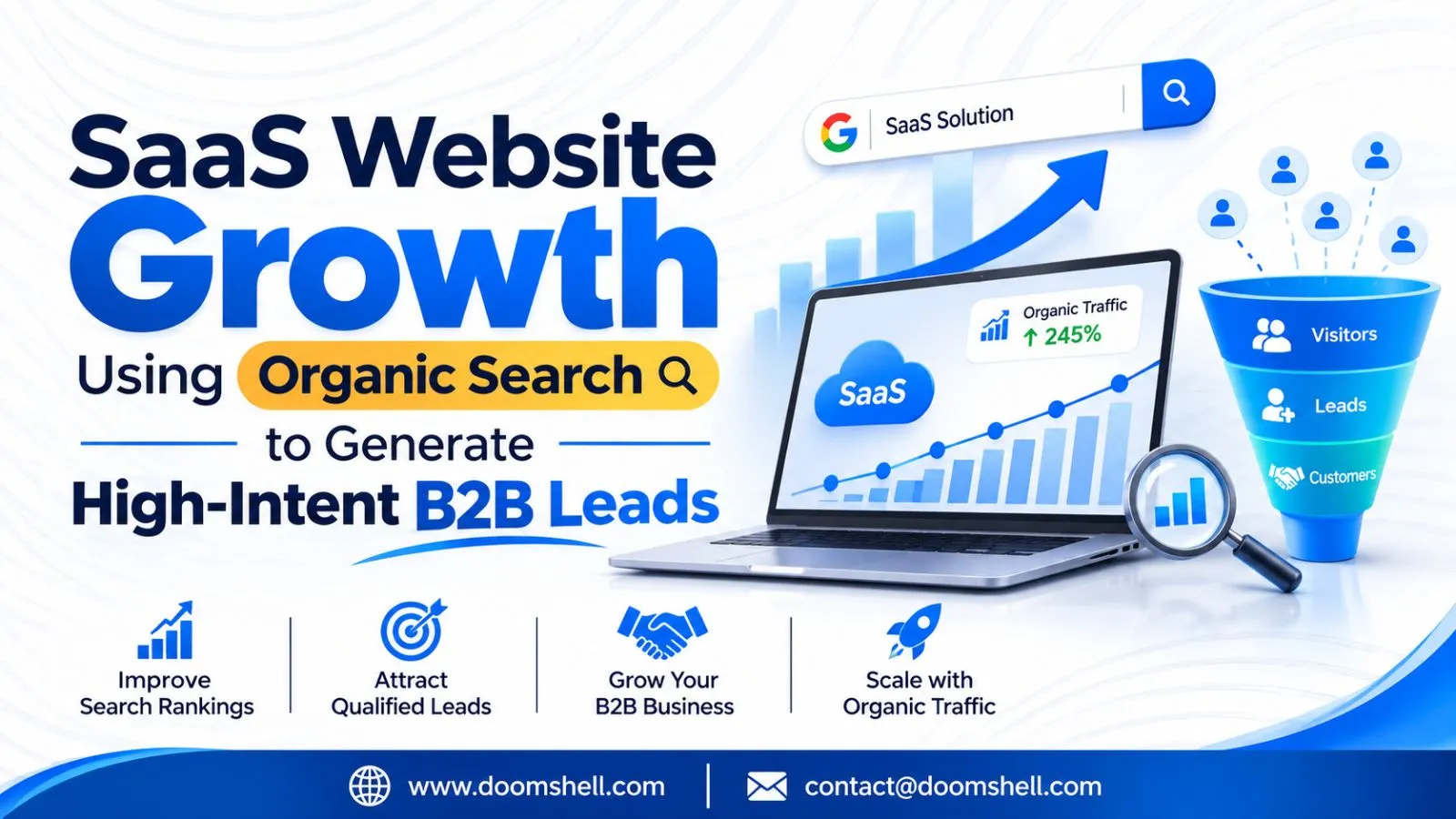
In 2026, SaaS companies need more than website traffic to generate consistent business opportunities. They need organic visibility across traditional search engines and AI-powered discovery platforms, where potential customers research software, compare competitors, evaluate features, and shortlist vendors before contacting a sales team. A well-planned SaaS SEO strategy connects these research activities with useful content and relevant product experiences.
For businesses looking for an SEO company in India, the priority should be attracting visitors who match their ideal customer profile rather than focusing only on rankings or monthly traffic. A startup searching for affordable CRM software, for example, has different requirements from an enterprise evaluating workflow automation or business intelligence platforms.
Successful B2B software SEO therefore requires a clear understanding of customer problems, buying stages, commercial search intent, and product positioning. It also requires content that demonstrates genuine expertise instead of repeating generic industry information. Google's people-first content guidance emphasizes usefulness, originality, and reliable information over content created primarily to manipulate rankings.
This guide explains how SaaS businesses can identify valuable search queries, build an effective content engine, optimize commercial pages, and connect organic search performance with actual revenue opportunities.
Building a SaaS SEO Strategy Around High-Intent Search Queries
Keyword research is the starting point of an effective B2B SEO strategy. However, SaaS businesses should not select keywords based only on search volume. The real objective is to understand what potential customers want to accomplish and how close they are to making a software purchasing decision.
Identifying Problem-Based and Solution-Based Keywords
B2B software buyers often begin their research by identifying a business challenge. They may search for ways to reduce manual work, improve team productivity, manage customer information, automate reporting, or streamline internal processes.
These searches provide opportunities to introduce a relevant software solution before the customer starts comparing specific products.
For example, a business experiencing inefficient customer management may search for:
-
How to manage customer information effectively.
-
Ways to automate sales follow-ups.
-
Software for managing business leads.
-
Tools to improve sales team productivity.
-
How to organize customer communication.
Solution-based searches are usually more specific. A potential buyer may search for CRM software, sales automation platforms, project management tools, or workflow automation solutions.
A practical SaaS keyword research process should group these queries according to the problem, solution, product category, and intended audience. It should also consider industry-specific terminology and the language customers use when describing their challenges.
This approach helps SaaS companies create content that answers real questions while naturally introducing relevant product capabilities. Rather than forcing product keywords into every article, businesses can build a connection between customer needs and the software features that address them.
Targeting Software Comparison and Alternative Searches
When buyers understand their requirements, they often begin comparing software providers. Searches such as product A vs product B, alternatives to a particular platform, and best software for a specific business requirement indicate stronger commercial intent.
These searches are valuable because users are actively evaluating available options rather than simply learning about a topic.
SaaS businesses can target these opportunities through:
-
Competitor comparison pages.
-
Alternative software guides.
-
Feature-by-feature comparisons.
-
Pricing and plan explanations.
-
Industry-specific software recommendations.
-
Product evaluation and implementation guides.
Comparison content should be accurate and transparent. Businesses should explain differences in features, integrations, pricing models, usability, and suitable customer segments without making unsupported competitor claims.
For example, a project management SaaS company could compare different approaches to task automation, team collaboration, reporting, and project visibility. This gives potential customers useful evaluation criteria while demonstrating the company's product positioning.
Review platforms, customer feedback, product documentation, and genuine product demonstrations can also help strengthen comparison content. The objective is to help buyers make informed decisions rather than publishing competitor-focused pages with repetitive promotional language.
Mapping Keywords to Different B2B Buying Stages
B2B software purchases often involve multiple decision-makers, longer evaluation periods, and detailed product assessments. Therefore, a single keyword strategy cannot address every stage of the buying journey.
A useful content plan maps search intent to the following stages:
|
Buying stage |
Search intent |
Suitable content |
|---|---|---|
|
Awareness |
Understand a business problem |
Educational blogs and guides |
|
Consideration |
Explore possible solutions |
Solution pages and use cases |
|
Evaluation |
Compare available products |
Comparison and alternative pages |
|
Decision |
Select a software provider |
Pricing, demos, and product pages |
For example, someone searching for ways to automate business processes may initially need an educational guide. Later, that same person may compare automation software before visiting a product page or requesting a demonstration.
Mapping keywords to buying stages helps prevent content overlap and creates a logical journey from information discovery to product evaluation.
SaaS marketers should also consider search visibility beyond conventional results. AI-powered discovery is becoming another research channel for software buyers, making accurate product information, clear positioning, and useful supporting content increasingly important. A 2026 G2 report highlights the growing role of AI chatbots in B2B software research, alongside continued use of traditional search.
Building an SEO Content Engine for SaaS
A successful SaaS content strategy requires consistent publishing around customer problems, product capabilities, industry requirements, and purchasing decisions. Instead of producing unrelated articles, businesses should develop connected content that supports both organic discovery and product evaluation.
Creating Product-Led Content That Supports Conversions
Product-led content connects educational information with practical software applications. It helps readers understand a business problem while showing how relevant product capabilities can address it.
For example, a SaaS company offering HR management software could publish content about employee onboarding challenges, attendance management, payroll workflows, and workforce reporting. Each topic can naturally demonstrate how the product supports the relevant business process.
Effective product-led content can include:
-
Feature-specific educational guides.
-
Product tutorials and implementation articles.
-
Industry-focused use cases.
-
Workflow automation examples.
-
Software selection resources.
-
Practical product demonstrations.
The content should focus on the user's problem first. Product features should appear where they genuinely help explain a solution.
This approach supports SaaS lead generation because visitors can move from learning about a challenge to understanding the software's practical value. Relevant demonstrations, trial opportunities, and consultation options can then provide a natural next step.
Developing Topic Clusters Around Customer Problems
Topic clusters organize related content around a central subject. A main pillar page covers a broader topic, while supporting articles answer specific questions connected to that subject.
For example, a SaaS business offering customer relationship management software could build a topic cluster around CRM management.
Supporting content might cover lead tracking, sales automation, customer segmentation, pipeline reporting, and CRM integration.
A well-organized cluster provides several benefits:
-
Covers related customer questions comprehensively.
-
Builds topical relevance around important subjects.
-
Helps visitors discover connected resources.
-
Creates logical pathways toward product pages.
-
Reduces unnecessary overlap between articles.
Keyword mapping is important when developing these clusters. Each page should have a distinct purpose and target a specific search intent rather than competing with another page on the same website.
Businesses should also review existing content before creating new articles. Updating a useful page with improved examples, clearer explanations, and current product information may be more valuable than publishing another article covering the same subject.
Using Case Studies and Expert Content to Build Authority
SaaS buyers often want evidence that a product can solve problems similar to their own. Case studies, implementation stories, expert insights, and detailed product explanations can help establish confidence during the evaluation process.
A strong case study should explain the customer's initial challenge, the solution implemented, the process followed, and the measurable outcome where verified data is available.
For example, a business software provider might describe how a customer improved reporting efficiency after implementing automated workflows. Specific results should only be included when supported by actual customer information and documented evidence.
Expert content can also demonstrate product knowledge through technical explanations, integration guidance, implementation considerations, and practical recommendations.
In 2026, these assets can support visibility across traditional search and AI-generated answers. Google's guidance for generative AI search continues to emphasize foundational SEO, unique and useful content, and clear technical structure rather than shortcuts designed specifically for AI systems.
Optimizing SaaS Pages for Commercial Search Intent
Educational blogs help attract potential customers, but commercial pages play a different role. They address visitors who already understand their requirements and want to evaluate specific software products, features, pricing, and providers.
Landing Pages for Product and Feature Searches
SaaS landing pages should clearly communicate what a product does, who it is designed for, and which business problems it solves. A visitor searching for project management software, for example, should immediately understand the platform's main capabilities and how it supports team collaboration.
Effective SaaS landing page optimization involves several important elements:
-
Clear page headlines: Explain the product's primary value without vague promotional statements.
-
Feature descriptions: Connect software capabilities with practical business benefits.
-
Relevant use cases: Show how different teams or industries can use the platform.
-
Trust elements: Include verified customer testimonials, case studies, and security information.
-
Conversion opportunities: Provide appropriate demo, trial, or consultation options.
-
Mobile experience: Ensure pages remain easy to navigate across devices.
Each landing page should target a distinct commercial search intent. For example, a page targeting HR management software should explain relevant HR capabilities rather than repeating generic SaaS development information.
Businesses should also optimize page speed, navigation, technical SEO, and conversion paths. Clear product information and consistent messaging help visitors understand the offer without unnecessary distractions.
Comparison and Alternative Pages for Bottom-of-Funnel Users
Comparison and alternative pages target users who are closer to choosing a software provider. These visitors may already know competing products and want to understand which platform best matches their requirements.
A useful comparison page should evaluate relevant differences such as:
-
Product features and functionality.
-
Pricing structures and available plans.
-
Integration capabilities.
-
Ease of implementation.
-
Customer support and onboarding.
-
Scalability and security requirements.
Alternative pages should explain which business requirements a product can address and where it may be a suitable choice. They should not rely on exaggerated claims or misleading competitor comparisons.
For example, a SaaS platform offering business automation could create comparison content explaining how different tools approach workflow creation, integrations, reporting, and user permissions.
Including screenshots, actual product demonstrations, and clearly explained evaluation criteria can make these pages more useful. Businesses should also update comparison information whenever product features, pricing, or market conditions change.
This type of content supports high-intent organic lead generation because it reaches people who are actively evaluating software solutions and preparing to make a purchasing decision.
Internal Linking From Educational Content to Product Pages
Internal linking connects educational articles, solution pages, feature pages, and product landing pages into a logical website structure. It helps visitors move between related topics while allowing search engines to understand how different pages relate to each other.
For example, an article explaining sales automation can direct interested readers toward a relevant automation feature page. A broader guide about CRM software can connect to specific pages explaining lead management, reporting, and customer communication.
A useful internal linking strategy should:
-
Connect related articles with relevant product pages.
-
Use descriptive anchor text that explains the destination.
-
Avoid excessive or unrelated links.
-
Prioritize pages that support important business goals.
-
Review broken links and outdated destinations regularly.
Internal links should provide genuine navigation value rather than being added simply to increase the number of links on a page.
For SaaS websites with large content libraries, regular internal link audits can reveal important pages that receive limited internal visibility. Improving these connections helps create a more useful journey from educational discovery to product evaluation.
Connecting Organic Search With SaaS Revenue
Organic search performance should be evaluated through its contribution to business growth, not just rankings and visitor numbers. SaaS companies need measurement systems that connect search activity with qualified leads, sales opportunities, and recurring revenue.
Measuring Qualified Leads Instead of Traffic Alone
High website traffic does not automatically produce valuable business opportunities. A SaaS website may attract thousands of visitors who are researching general topics but have no intention of purchasing software.
Qualified lead measurement helps businesses understand whether organic search is attracting the right audience.
Useful indicators include:
-
Marketing-qualified leads generated through organic search.
-
Sales-qualified leads from organic landing pages.
-
Demo and consultation requests.
-
Free trial registrations.
-
Product sign-ups from relevant customer segments.
-
Lead-to-opportunity conversion rates.
Businesses should define lead qualification criteria based on their ideal customer profile. Factors may include company size, industry, business requirements, decision-making authority, and product suitability.
For example, a SaaS platform designed for enterprise finance teams should distinguish between relevant enterprise inquiries and unrelated individual research visits.
Tracking these metrics helps marketers identify which keywords, landing pages, and content categories attract visitors with genuine purchasing potential.
Tracking Organic-Assisted Pipeline
B2B software purchases often involve multiple interactions before a customer converts. A prospect may first discover an educational blog, return through a branded search, visit a product comparison page, and finally request a demonstration.
Looking only at the last interaction can overlook the contribution of earlier organic search visits.
Organic-assisted pipeline measurement connects website engagement with the sales process. Businesses can use CRM systems and analytics platforms to understand how organic content contributes to lead generation and opportunity development.
Important measurements include:
-
Organic-sourced opportunities.
-
Organic-assisted conversions.
-
Pipeline value associated with organic interactions.
-
Demo-to-opportunity conversion rates.
-
Customer acquisition cost from organic channels.
-
Revenue generated by organic search leads.
Attribution models should be interpreted carefully because no single model captures every influence on a B2B purchase. Combining first-touch, last-touch, and multi-touch reporting can provide a more complete picture of the customer journey.
Businesses should also maintain consistent campaign tracking, CRM source information, and conversion definitions. This makes it easier to compare SEO performance with other marketing channels and identify the content that contributes to actual revenue opportunities.
Using Search Data to Improve Product and Content Strategy
SEO data can reveal more than which pages receive traffic. It can help SaaS businesses understand customer expectations, identify content gaps, and discover which product features attract the most interest.
Search Console data can highlight queries generating impressions, clicks, and changes in organic visibility. Analytics and CRM information can then help connect those visits with meaningful business outcomes.
For example, if searches related to workflow automation generate strong engagement but few demo requests, the business may need to improve its landing page, clarify product benefits, or strengthen its conversion journey.
SaaS companies should regularly review:
-
Search queries with increasing impressions.
-
Keywords generating commercial traffic.
-
Landing pages with strong engagement.
-
Pages attracting qualified leads.
-
Content with declining organic performance.
-
Search topics related to new product features.
Search insights can also inform product strategy. Repeated searches about missing integrations, specific workflows, pricing requirements, or technical capabilities may reveal customer needs that deserve further investigation.
Combining SEO research with sales feedback, customer support questions, and product analytics creates a more complete understanding of the market. This allows marketing and product teams to prioritize improvements based on actual customer demand rather than assumptions.
Conclusion: Turning SaaS Organic Search Into Sustainable Business Growth
A successful SaaS SEO strategy connects customer search intent with useful content, relevant product experiences, and measurable business outcomes. By targeting problem-based keywords, developing topic clusters, creating comparison pages, and optimizing commercial landing pages, B2B software companies can attract potential buyers at different stages of their purchasing journey. Measuring qualified leads, organic-assisted pipeline, and conversion performance further helps businesses understand the commercial value of their SEO investment. In 2026, combining traditional search optimization with useful AI-search-ready content and genuine product expertise can create a stronger foundation for sustainable SaaS growth.
Doomshell Software Pvt. Ltd. provides digital marketing, SEO, software development, and custom technology solutions for businesses across different industries. Its services support organizations looking to improve online visibility, develop digital products, and strengthen their technology infrastructure. With expertise in search optimization and modern software solutions, Doomshell helps businesses build strategies that connect digital presence with practical business objectives. As an IT company, Doomshell supports organizations in developing scalable digital solutions and improving their online growth opportunities.